
Safety Infrastructure
(4 companies)Infrastructural products that are mounted or installed within a facility for industrial safety protocols including but not limited to guard rails for warehouses, safety bollards, and spill containment berms.
-
 See us at N-5180
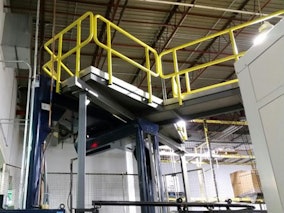
DORAL
Doral specializes in building and installing structural steel framing and fabrication of metal plant infrastructure projects such as platforms, mezzanines, catwalks, and ladders used in food and beverage plants, packaging facilities, warehouses and more. Doral’s capabilities also include aluminum and stainless steel fabrication of ladders, cross-overs, stairs and handrails, joists, girders, and metal decking, trust and building reinforcement, boiler breaching, crane rail systems and more. Doral can pre-assemble parts of many projects in its facility and then transport them to the field in large components to save customers time and money and avoid constraints in the field.
You are currently not logged in -
 See us at LU-8315
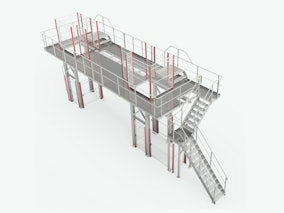
GSM America Inc.
GSM’s supplies mezzanine platforms, machine guarding doors and machine guard fencing. Steel mezzanine platforms are carefully designed and engineered to allow personnel to safely work on or crossover active conveyors and machines. After a detailed analysis of the customer's needs followed by intensive project planning by its design team, GSM devises and produces tailor-made elevated platform solutions based on each workplace’s unique space specifications and other requirements. GSM also offers machine guarding doors as well as three lines of sturdy and durable machine guard fencing, each suitable for a variety of different demands and requirements.
You are currently not logged in -
 See us at N-5160
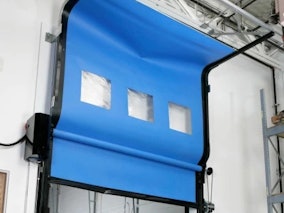
Rite-Hite
Rite-Hite has a full-line of industrial doors, safety barriers, and industrial curtain walls. Products include industrial exterior and interior doors, cold storage doors, roll up doors and bi-parting doors for virtually any application need, such as FasTrax® and LiteSpeed® high speed doors, ZoneWorks® Industrial Curtain Walls, and more. Rite-Hite's FasTrax and FasTrax XL doors offer TRUE Auto Re-feed™ and Soft Breakaway technologies for high efficiency and safety, while LiteSpeed doors are tailored for safe and efficient operation in various industrial settings. SplitSecond’s bi-parting door design helps to enhance operational efficiency in high-traffic areas. Rite-Hite also designs and manufactures clean room doors, warehouse screen doors, cooler and freezer doors.
You are currently not logged in -
Savety Yellow Products
Since 2003, Save-ty Yellow Products has specialized in facility asset protection and safety products for manufacturing, distribution centers, and warehousing facilities. The company designs products aimed at reducing overall costs, including installation, and offers a range of models and custom applications to meet specific facility needs. Its product line includes industrial guard rails, collision awareness forklift warning systems, column and rack post protectors, building column protectors, industrial handrails, dock and driveway gates, mezzanine and handrail gates, steel bollards, and machine guards. With a sales and distribution center in West Chicago and a 125,000 sq. ft. ISO-9000 certified manufacturing facility in Rockford, Illinois, Save-ty Yellow Products is strategically positioned to support North American logistics. The company is a member of the National Safety Council (NSC), Material Handling Equipment Distributors Association (MHEDA), and the Material Handling Institute (MHI).
You are currently not logged in
Report an Issue
Incorrect/inaccurate categorization? Report inaccuracies or problems »
Related Building Infrastructure searches
More on Safety Infrastructure
Explore the role and functionality of safety infrastructure in industrial settings, including guard rails, safety bollards, and spill containment berms, and their benefits for maintaining workplace safety.
Safety infrastructure encompasses a range of products designed to enhance safety within industrial environments. These products, which include guard rails, safety bollards, and spill containment berms, are typically mounted or installed within a facility to adhere to industrial safety protocols. Their primary function is to mitigate hazards and protect both the workforce and the facility from accidents and potential environmental damage.
The operation of safety infrastructure is relatively straightforward yet critical. Guard rails are installed along walkways or around hazardous areas to prevent personnel from accidental falls or straying into dangerous zones. Safety bollards serve as physical barriers, protecting sensitive areas like fuel pumps, front entrances, and pedestrian pathways from vehicle intrusions. Spill containment berms are used to contain leaks or spills from chemicals or other hazardous materials, preventing them from spreading into the environment and causing contamination.
These infrastructural components are utilized across various sectors, including manufacturing plants, warehouses, chemical processing facilities, and many other industrial settings. For instance, in a warehouse, guard rails can safeguard against accidents involving forklift operations by defining safe walkways and protecting shelving units from collisions. In chemical plants, spill containment berms are essential for complying with environmental regulations and ensuring that accidental spills are controlled and managed effectively.
The benefits of implementing safety infrastructure are significant. Firstly, these measures drastically reduce the risk of workplace accidents, enhancing worker safety and reducing the likelihood of costly downtime and litigation. Additionally, they help organizations comply with various safety standards and regulations, avoiding fines and helping maintain a good reputation. Effective safety infrastructure also contributes to operational efficiency by clearly demarcating safe zones and pathways, thus optimizing the flow of people and machinery.
For those involved in maintaining and enhancing industrial safety, a wealth of options is available for sourcing these critical safety infrastructures. Exploring different suppliers and manufacturers can provide insights into the latest products and installation techniques. The PMMI's ProSource directory offers a comprehensive listing of companies specializing in these essential safety products, facilitating the search for the right solutions to meet specific safety needs.